How to Choose Your Third Set Once You Know What You Actually Wear
Quick Answer: Before buying a third set, look at which of your first two you actually reach for and identify why. It is almost always one specific feature, usually the waistband height, the bra support level, or the fabric weight, rather than the colour or the brand. Buy the third set to fill a genuine gap in use case, not in colour. The most common real gap is a set for a different activity intensity than your existing ones, and the most common wasted purchase is a third set that duplicates the use case of your favourite.
The third purchase is where a collection either becomes useful or becomes a drawer of near-identical things.
This blog has covered why the second set you buy should not be black, why a set you love in the mirror feels wrong two hours later, why a set that photographs well often wears badly, and why the top outlives the bottom. This is the buying decision informed by all of them.

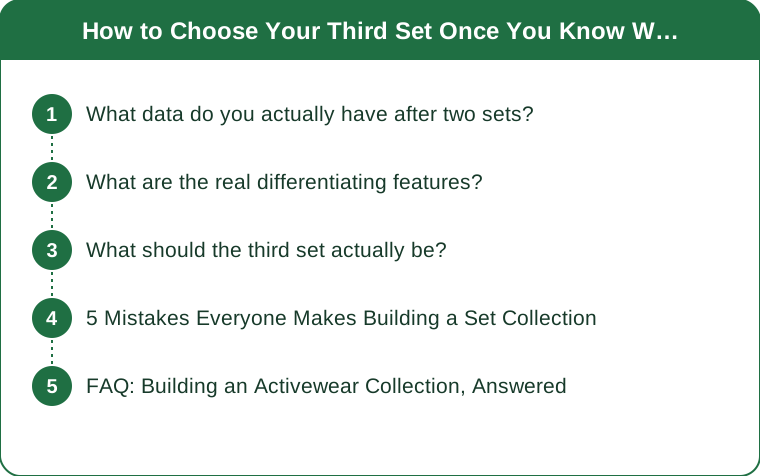
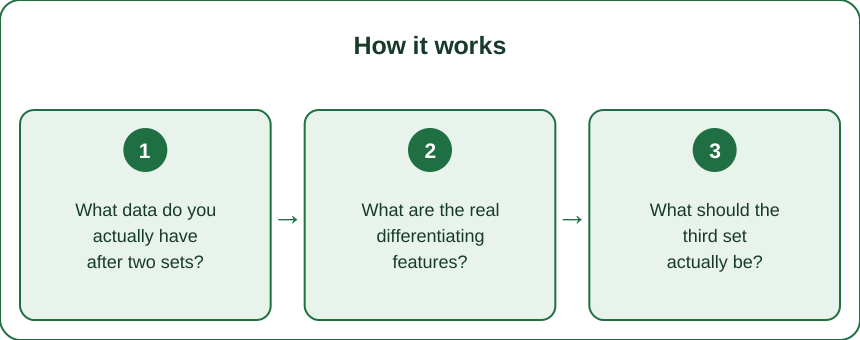
What data do you actually have after two sets?
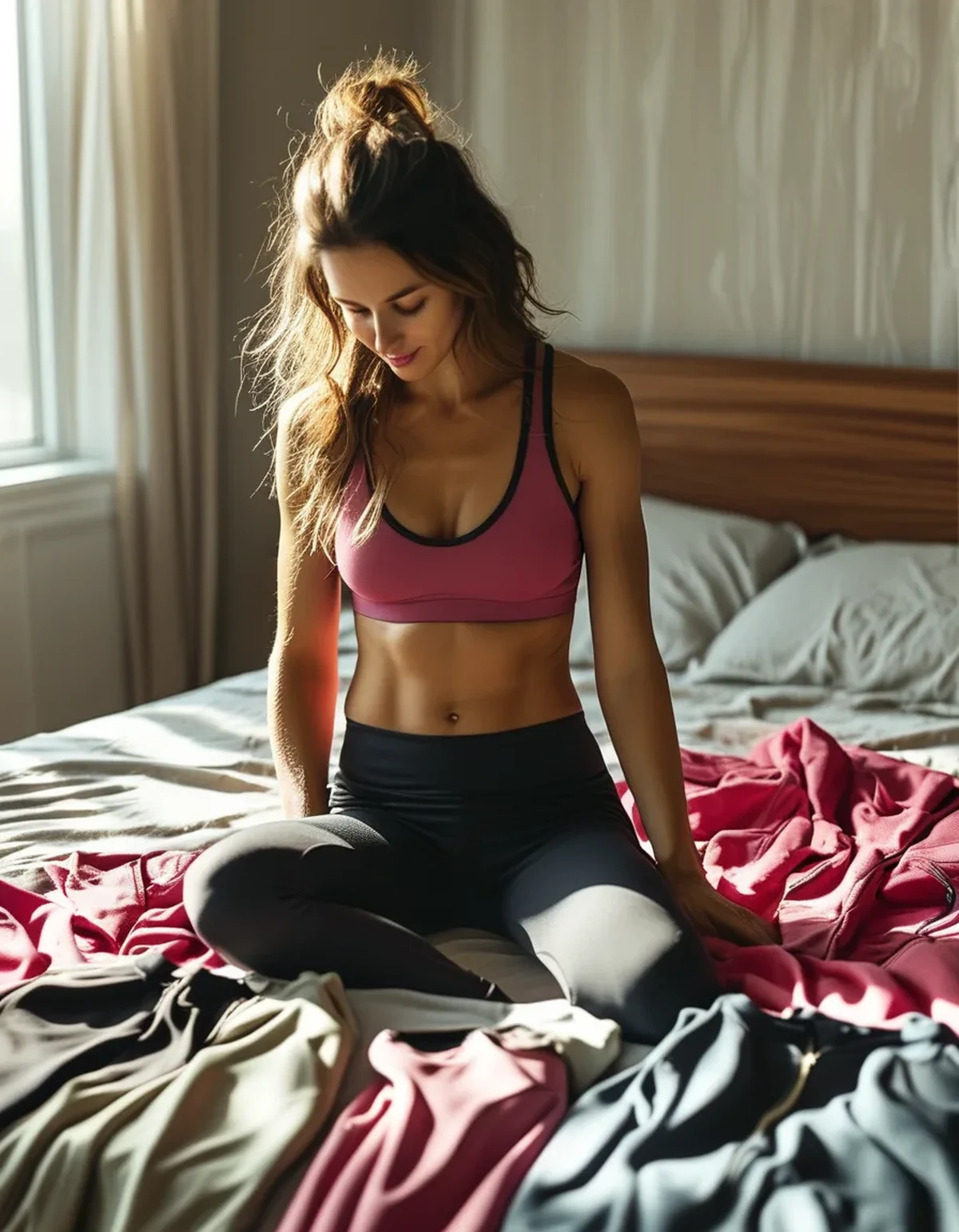
More than you think, and it is sitting in your laundry basket.
Wash frequency is the honest measure of what you wear. Whichever set you wash most is your favourite, regardless of what you would say if asked. Check which one is in the basket more often over a month.
Which piece you wear separately tells you what works. If you wear one set’s leggings with other tops constantly but never the matching bra, the leggings are the good garment and the bra is not.
What you avoid on important days is diagnostic. Everyone has a set they will not wear to a class where they might see people they know. Whatever is wrong with that set is a real criterion, and it is worth naming precisely.
Where the wear shows tells you about fit. Pilling at the inner thigh, a stretched-out waistband, or a bra band that has gone soft all point at specific fit issues that will recur if you buy the same thing again.
And how you feel two hours in matters more than how it looks at minute one. Most people buy on the mirror test and wear on the two-hour test, and the two frequently disagree. Note which of your sets passes the second one.
Write down three sentences before you shop. What I wear most and why, what I avoid and why, what I wish I had. Fifteen minutes of this beats an hour of browsing.
What are the real differentiating features?
A short list, and colour is not on it.
Waistband height and construction. High-rise versus mid-rise is a genuine functional difference, and so is a wide flat band versus a narrow one versus one with a drawcord. This is the most common reason one pair gets worn and another does not, and it is the first thing to identify.
Bra support level and closure type. Light support pullover, medium support, or high support with a back closure. These are three different garments for three different activities, and owning two of the same level while doing an activity that needs the third is the most common real gap.
Fabric weight and finish. A lightweight buttery set and a heavier compressive set feel completely different and suit different sessions. Owning two of the same weight is duplicating rather than building.
Length. Full length, seven-eighths, and capri behave differently across seasons and activities. Early autumn is exactly when this becomes obvious.
Pocket presence. A side pocket that holds a phone changes what a legging can be used for entirely, and it is either there or it is not.
Opacity level. Some sets are reliably opaque and some are only reliable under certain conditions. Knowing which of yours is which shapes where you can wear each one.
What should the third set actually be?
The one that fills your largest genuine gap, and here are the four most common gaps.
Gap one: a different intensity level. If both your sets are medium-support and you have started running, you need high support. If both are compressive and you mostly do yoga, you need something softer. This is the most common real gap and it is the highest-value purchase.
Gap two: a different season. If both your sets are lightweight summer pieces and it is August, a heavier set for autumn is a genuinely useful purchase right now. Full length rather than capri, heavier fabric, possibly a longer-sleeved top.
Gap three: a set you can wear outside a gym. Many people want one set that reads as an outfit rather than as workout gear. That is a legitimate use case and it has different criteria: colour, cut, and how the pieces work with a jacket and proper shoes.
Gap four: a backup of what you already love. If you wear one set three times a week, buying a second identical one is unglamorous and it is frequently the correct answer. It doubles the rotation, extends the life of both through recovery time between wears, and you already know it works.
And a note on colour. If you have two dark sets, a third dark set is not a gap. But if you have one black and one bright, a mid-tone neutral is genuinely more versatile than a second bright.
Buy one thing and wear it for a month before buying anything else. Two purchases at once means you learn nothing from either.
5 Mistakes Everyone Makes Building a Set Collection
1. Buying by colour rather than by function. Colour is the most visible variable and the least important one. Three sets in three colours at the same support level and the same fabric weight is one set bought three times.
2. Buying the third set from the same brand automatically. Brand loyalty after two purchases is a small sample. If your two sets have the same flaw, that flaw is likely a brand pattern, and the fix is a different brand rather than a different colour from the same one.
3. Ignoring what you wear separately. If you constantly split a set and wear the pieces with other things, you do not want another set, you want more individual pieces. This is a common and expensive misread.
4. Buying during a sale rather than during a gap. A discounted set that duplicates what you own is not a saving. The question is always whether it fills a gap, and a sale does not change that answer.
5. Buying for the version of you who trains five days a week. Buy for your actual weekly pattern. Most people own more activewear than their training frequency requires, and the surplus sits unworn while the favourite pair wears out.
FAQ: Building an Activewear Collection, Answered
How many activewear sets do you actually need?
Enough to cover your weekly training frequency with a wash cycle, plus one for a different intensity if your activities vary. For most people training three to four times a week, three sets is genuinely sufficient.
What should my third workout set be?
Whatever fills a real gap: a different support level, a different season weight, one that works outside the gym, or a duplicate of the one you already wear constantly. Not a third colour at the same specification.
Is it worth buying two identical sets?
Often yes. If you wear one set several times a week, a duplicate doubles your rotation and extends both sets’ lives, since elastane needs recovery time between wears. It is unglamorous and frequently the right call.
TL;DR:
- Your laundry basket has the data. Whichever set you wash most is your favourite, whatever you would say otherwise.
- The differentiating features are waistband, support level, fabric weight, length, pockets, and opacity. Colour is not one of them.
- The four real gaps are a different intensity, a different season, one that works outside the gym, or a duplicate of your favourite.
- Buy one thing and wear it a month before buying anything else, or you learn nothing from either purchase.
If you keep splitting your sets and wearing the pieces separately, you do not want another set. You want more individual pieces.
See It in Motion
Seen here: Super High Waist Embossed Yoga Leggings with Inner Pocket — shop it on bubblelime.com
Keep Reading
This article is for general informational and styling purposes only. Fit, sizing, and product availability may vary.