Breaking Up the Set: Why Your Matching Sets Should Rarely Match
Quick Answer: A matching set worn only as a set is two garments doing one outfit’s work — the arithmetic flips when you split them: two sets in compatible colors yield at least four outfits, and a small system of three coordinating sets generates a week of looks. The splitting rules: keep one piece as the anchor, pair across sets within a shared color family, and use the matched version as the deliberate ‘pulled-together’ option rather than the default. Sets are a system purchase pretending to be an outfit purchase.
The matching set’s marketing sells the photo — top and bottom in perfect agreement — and the drawer obeys: sets worn as sets, washed as sets, retired as sets. Which quietly halves their value, because the set’s actual superpower was never the matching; it was the pre-coordinated compatibility that makes every split-up combination work too.

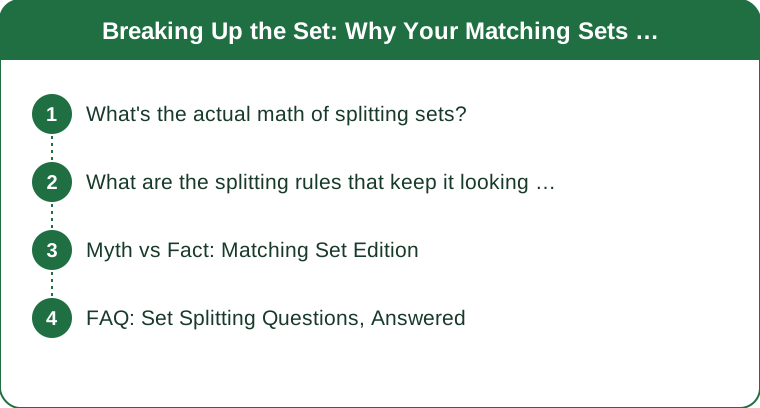
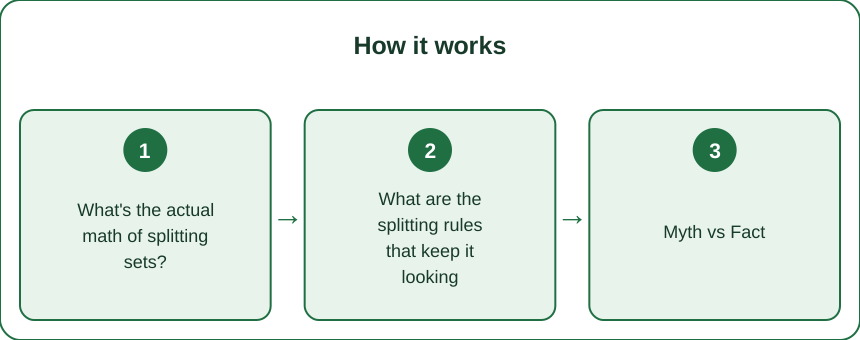
What’s the actual math of splitting sets?
Combinatorics, wearing activewear:
- One set, never split: 1 outfit. (And a fragile one — when the leggings wear out first, the orphaned top’s ‘partner’ is gone and it stalls in the drawer.)
- Two sets in compatible colors, split freely: each top pairs with both bottoms = 4 outfits from the same four garments.
- Three coordinating sets: up to 9 combinations — a fortnight of distinct looks from six pieces, which is capsule-wardrobe math achieved accidentally through the sets aisle.
The compatibility prerequisite that makes it work: buying sets within a planned color family rather than as isolated impulse purchases — neutrals (black, charcoal, oatmeal, espresso) plus one or two accent tones that share undertones. The classic failure case is a drawer of orphan sets in unrelated saturated colors — each gorgeous, none interoperable, all locked into their factory pairings forever.
And the durability bonus nobody counts: split-rotation spreads wear evenly — bottoms typically die first (friction, washing, stretch cycles), and cross-pairing means no top gets widowed when its original partner retires.
What are the splitting rules that keep it looking intentional?
Rule 1 — one anchor, one player: build each split outfit around a dominant piece (usually the bottom) and let the other piece relate to it — same color family, deliberate contrast, or neutral-plus-accent. The look to avoid is two pieces almost matching (slightly-off same-color reads as laundry accident; clearly-different reads as styled).
Rule 2 — the texture split: pairing across sets works best when textures differ enough to look chosen — the ribbed set’s top over the smooth set’s leggings reads as intentional composition; two nearly-identical smooth fabrics in different colors can read as mismatch. Texture contrast is the same trick layering uses, miniaturized.
Rule 3 — the matched version becomes the occasion option: once splitting is the default, wearing the full matched set reads as the elevated choice — the pulled-together studio look, the travel outfit, the athleisure-lunch uniform. Scarcity restored its power.
Rule 4 — third pieces multiply everything again: every split combination times every layer (shacket, long cardigan, oversized shirt) — the two-set, one-layer drawer is quietly a 8-12 outfit system.
The buying checklist this implies: before any new set — does each piece pair with at least two things I own? Does the color join my existing family? Is the fabric weight consistent with my other sets (season-compatibility)? Three yeses = a system purchase; three nos = buying a photograph.

Myth vs Fact: Matching Set Edition
Myth: Sets are lazy styling — real outfits are assembled. Fact: The set system is assembled — once, at purchase, by choosing interoperable colors — and then pays out daily with zero decision cost. That’s not lazy; that’s front-loaded styling, the same logic as every capsule wardrobe ever built.
Myth: Splitting sets wastes the matching premium you paid for. Fact: The premium bought pre-coordination — guaranteed-compatible fabric, tone, and cut — which is exactly what makes the splits work where random separates clash. Wearing the coordination in four configurations uses more of what you paid for, not less.
Myth: Bold-colored sets can’t split. Fact: They split against neutrals beautifully — the cobalt top over black leggings is a styled outfit; cobalt-on-cobalt is the occasional full-volume day. The rule isn’t ‘no bold sets’; it’s ‘bold sets need neutral teammates in the drawer’ — one bold set per two neutral ones keeps every purchase interoperable.
The wardrobe meta-point: the sets aisle accidentally sells the best capsule-building units in activewear — pre-matched pairs that interoperate if you plan the palette — and the only thing preventing the system is the assumption that the factory pairing is a rule rather than a suggestion.
FAQ: Set Splitting Questions, Answered
My sets are all different brands — do splits still work?
Color and fabric-weight compatibility matter; the label doesn’t. The one brand-adjacent caveat: sizing and rise conventions differ, so cross-brand bottoms may fit differently under the same top — the mirror test settles it, not the logo.
How many sets make the ideal system?
The sweet spot for most: 3-4 sets (2-3 neutral, 1 accent) plus 1-2 third pieces — roughly 12+ outfits from 8ish garments, covering training, errands, and athleisure-social. Beyond that, additions should replace retirements rather than expand (the interoperability math saturates).
What about matching sets in loungewear and knit co-ords — same rules?
Identical logic, softer fabrics — the knit co-ord’s cardigan over different bottoms, the lounge pants under other tops. If anything, lounge sets split more gracefully (drape hides the athletic-fit precision matching demands). The universal test survives category changes: a set you’d never split is half a purchase.
TL;DR:
- Set-only wear halves the value: two compatible sets split = 4 outfits, three = up to 9 — the matching premium bought interoperability, not a rule
- Split rules: one anchor piece, texture contrast across sets, clearly-different beats almost-matching
- Buy within a color family (neutrals + one accent) — orphan sets in unrelated brights lock themselves into factory pairings
- The full-matched version becomes the occasion look; third pieces multiply the whole system again
The factory paired them for the product photo — your drawer is allowed a more interesting arrangement. This is general information, not medical advice.
See It in Motion
Seen here: High Waist 8” Yoga Shorts — shop similar styles on bubblelime.com
Keep Reading
This article is for general informational and styling purposes only. Fit, sizing, and product availability may vary.