The Matching Set Colors to Buy First
Quick Answer: Start a matching activewear set collection with versatile neutrals like black, gray, or navy, then add one or two colors you genuinely love and that flatter you. Build outward from there toward a cohesive palette, and every set you own will mix and match with every other one.
You’ve got three matching sets you love, and somehow none of them go together — the neon clashes with the pastel, and the print fights with everything. A little color strategy up front fixes this completely, and it’s easier than it sounds.

Which Colors Should You Buy First for a Matching Set Collection?
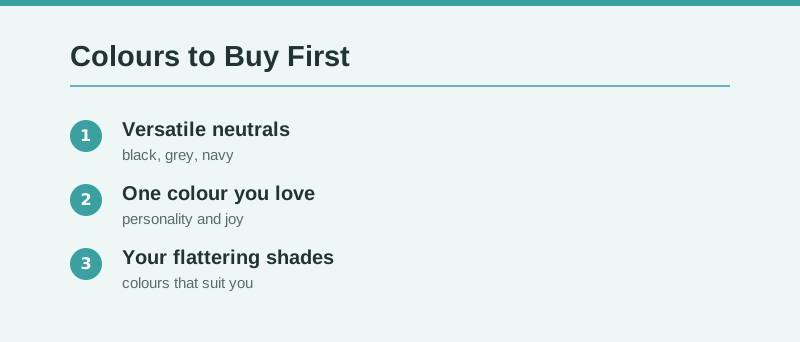
Start with black, gray, and navy — the most versatile foundation you can build a set collection on. These neutrals mix with everything, flatter nearly every skin tone, never look dated, and work for any activity from a gym session to a coffee run.
A couple of neutral sets gives you:
- A reliable, flattering option for literally any day.
- Pieces that mix easily with every color you add later.
- A foundation that never feels like it’s “gone out of style.”
Neutrals aren’t the exciting choice, but they’re the smart one — everything else you buy builds on top of them.

Should You Add Bold or Trendy Colors Next?
Once your neutral foundation is set, add one color you genuinely love — a rich jewel tone, a soft pastel, or a bold hue that lifts your mood every time you put it on. One well-chosen color adds personality to the collection while still mixing easily with your neutrals.
Resist the urge to buy five colors at once just because they’re trending. A color you’ll actually reach for beats a color that just looked good in a photo — and choosing something you feel great in means it won’t sit in the drawer.

How Do You Choose Colors That Actually Flatter You?
Lean toward the shades that genuinely suit your coloring — the ones that make you glow rather than wash you out. Activewear you feel great in is activewear you’ll actually wear, so it’s worth the extra thought before you buy.
A quick way to check:
- Hold the color near your face in natural light — does it brighten you or flatten you?
- Notice which compliments you get most in photos, and lean into those tones.
- When in doubt, warmer skin tones often do well in olive, rust, and warm reds; cooler skin tones often do well in jewel blues, purples, and true reds.
This one small filter turns a coordinated collection into one that’s genuinely enhancing, not just color-matched.

How Do You Build a Cohesive, Mix-and-Match Wardrobe?
As your collection grows, keep choosing colors that coordinate into one overall palette instead of adding random hues that don’t talk to each other. A few neutrals plus a couple of complementary colors is usually plenty to create serious mix-and-match potential.
Once your palette is cohesive, you can swap tops and bottoms between sets to create entirely new combinations — effectively multiplying your outfit options from a relatively small number of pieces. A handful of well-chosen sets ends up delivering a whole wardrobe of coordinated looks.
What Nobody Tells You About Building a Set Collection
Most people build set collections backwards — buying whatever color catches their eye first, then wondering why nothing matches later. The pieces that actually get worn are almost never the boldest or trendiest ones; they’re the neutrals that go with everything, worn on repeat. And the “cohesive palette” everyone wants isn’t really about buying more — it’s about being disciplined enough to stop buying colors that don’t talk to what you already own.
There’s also a quiet money-saving angle here. A tightly coordinated palette means fewer impulse purchases down the road, because almost anything new you add already has three or four pieces in your closet ready to pair with it. Shoppers who plan their palette from the start tend to end up with smaller, more-worn collections than shoppers who buy set by set with no color plan at all — which is really the whole point of starting smart.
How many matching sets should I own to start?
Two to three neutral sets is a solid starting point, since they’ll mix with almost anything you add later. From there, one or two colors you love rounds out a genuinely versatile early collection.
What if I already own a lot of clashing colors?
Start treating your neutrals as the “hub” and build outward — pair your clashing pieces with a neutral top or bottom instead of with each other, and slow down on new colors until your palette feels more cohesive.
Are neutrals boring for activewear?
Not at all — neutrals are the reason your bold or trendy pieces get to shine, since they never compete for attention. A collection that’s “boring” on paper often photographs and mixes better than one packed with color.
TL;DR:
- Start with versatile neutrals — black, gray, navy — as your set collection’s foundation.
- Add one or two colors you genuinely love and will actually reach for.
- Choose shades that flatter your coloring, not just whatever’s trending.
- Build toward a cohesive palette so every piece mixes with every other piece.
- A little color strategy up front turns a handful of sets into a whole wardrobe of outfits.
Keep Reading
This article is for general informational and styling purposes only. Fit, sizing, and product availability may vary.