The Two-Season Set Closet: Rotating Matching Sets Through the Year
Quick Answer: Run your matching set collection on a two-box, two-switch year: a summer roster (shorts sets, ribbed tanks, open-knit combos) and a winter bench (fleece-lined pairs, sweatshirt sets, heavy ribbed longsleeves). Switch in spring and fall, audit as you switch, and keep two or three mid-weight sets in permanent rotation.
The matching set collection has a seasonality problem nobody actually manages.
The fleece-lined winter pair sulks through July, taking up drawer space. The shorts set is buried under three sweatshirt sets in January. Everything is technically available and half of it is unwearable.
Two boxes and two switches a year fixes it.

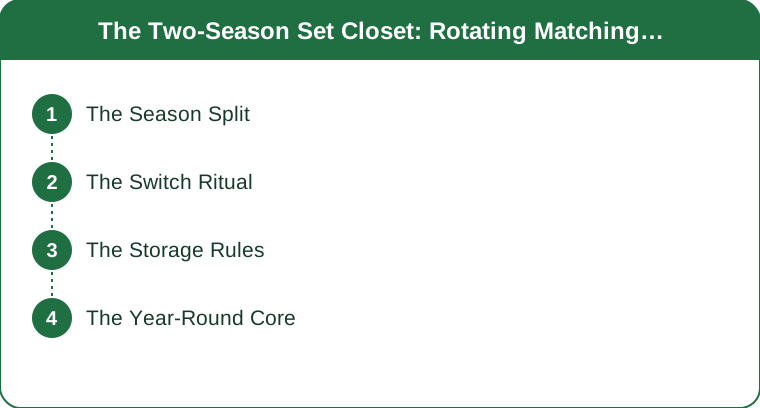
How Do You Split the Collection?
The summer roster: shorts sets, ribbed tank pairs, lightweight open-knit combos, anything short-sleeved.
The winter bench: fleece-lined leggings pairs, sweatshirt sets, heavy ribbed longsleeves, anything brushed on the inside.
Spring and fall run on the overlap plus one light layer — which is exactly why those two moments are the natural switch points rather than a hard date on the calendar.
Two boxes, two switches a year. Everything in the drawer is something you could wear today.
What Should You Do During the Switch?
Treat each rotation as the audit. This is the part that makes the system worth more than tidiness.
Try things on. Bodies and preferences drift across six months. The set you loved in March may not be the one you reach for now, and finding that out at the switch beats finding out on a rushed morning.
Flag the unworn. Anything that went a full season unworn gets noted. Two seasons unworn is the donation conversation — not automatic, but honest.
Write the gap list. This is the single most valuable ten minutes. With the entire collection visible at once, you can see what’s genuinely missing — and it’s almost never what you’d have guessed. Most people discover they have five black sets and no mid-weight anything.
Shop from the gap list, not from the sale email.

How Should Off-Season Sets Be Stored?
Clean, always. Stains set in storage and become permanent over six months. Body oils also attract moths, which is a problem specifically for wool blends.
Folded, in breathable boxes. Cotton storage boxes, fabric bins, or cardboard with the lid loosely on. Air needs to move.
Not in vacuum bags. Vacuum compression crushes knit structure — it’s fine for puffer jackets and duvets, and unkind to ribbed sets, which come out flattened and slow to recover.
Cedar for wool blends. Cedar blocks or a sachet in the box. Refresh the scent by sanding the block lightly each year.
The spring reunion should smell like cedar, not regret.
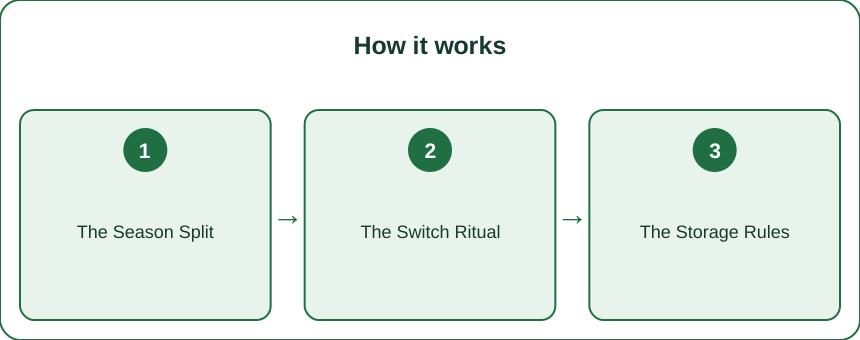
What Stays Out All Year?
Two or three sets earn permanent rotation: the mid-weight pairs that layer up in winter and breathe in summer.
These are the capsule’s all-season backbone — usually a mid-weight legging-and-longsleeve pair in a neutral, and one that’s slightly nicer than the rest for leaving the house in.
The rotation system exists to manage the specialists. The core never leaves the drawer.
5 Mistakes Everyone Makes
- Storing dirty. The single most common one, and the most expensive — a stain that would have washed out in March is permanent by October.
- Vacuum-bagging knits. Convenient, and it flattens ribbing and elastic structure.
- Switching by calendar date instead of weather. Mid-September in one city is mid-October in another. Switch when you’re reaching for the other box, not when the month changes.
- Skipping the try-on. The audit is the whole return on the ritual. Without it you’re just moving boxes.
- Buying during the switch. Write the gap list, then wait a week. Post-audit enthusiasm buys duplicates.
FAQ
When exactly should I switch?
When you’ve reached past the current box twice in one week for something in the other one. Practically that lands around late March–April and late September–October in most of the US, but weather beats the calendar.
How do I store sets so the tops and bottoms stay together?
Fold each set as a unit — bottom folded, top folded around it — so it comes out as a pair. It sounds fussy and it saves the “where’s the matching top” search every single time.
Do I need to wash before storing if I only wore it once?
Yes. Even one wear leaves body oils, and those are what attract moths to wool blends and what turn into set-in yellowing on light colors over months.
What about sets that don’t fit either season?
Those are your all-season core — mid-weight pieces that layer both ways. Keep two or three out permanently and store the rest.
TL;DR:
- Two boxes, two switches: summer roster and winter bench
- Spring and fall run on the overlap plus a light layer
- Use each switch as the audit: try on, flag the unworn, write the gap list
- Two seasons unworn starts the donation conversation
- Store clean — stains set and body oils attract moths
- Breathable boxes, not vacuum bags; vacuum crushes ribbed knit
- Cedar for wool blends
- Keep two or three mid-weight sets in permanent rotation
The sets were never too many. They were just all on shift at once, half of them out of season.
Keep Reading
This article is for general informational and styling purposes only. Fit, sizing, and product availability may vary.