The Two-Set Rule Nobody Actually Follows Before Buying a Third Matching Set
Quick Answer: Before buying another matching set, check whether your current 2 favorite sets are actually in your regular rotation or sitting unworn — most people have plenty of sets already and the real gap is a specific color or fabric weight, not total quantity.
You’re eyeing a new matching set in a color you don’t have yet. Before adding it to cart, there’s a one-question test that tells you whether you actually need it or whether you’re about to buy a sixth set that ends up worn as often as your third and fourth.

What is the actual two-set rule?
Look at your two most-worn matching sets from the last month. Are they in regular rotation — worn at least weekly — or has one of them barely left the drawer since you bought it? If even your favorites aren’t getting consistent wear, adding another set doesn’t solve a real gap; it just adds another item competing for the same limited number of workout days you actually have.
Why do people skip this check and buy anyway?
Because the new set is exciting in a way the existing ones, however good, no longer are — new color, new fabric technology, a shape you haven’t tried. That novelty appeal has nothing to do with whether your actual wardrobe has an unmet gap, and it’s very easy to mistake ‘this is appealing’ for ‘I need this.‘
How do you tell the difference between a real gap and just wanting something new?
A real gap has a specific, functional reason: you train in a climate or activity your current sets don’t handle well (too hot, not enough compression, wrong length for a new sport), or your current sets are genuinely worn out (pilling, faded, stretched). A novelty want is usually about color or a slightly different cut with no functional complaint about what you already own.
What Nobody Tells You About Set Rotation
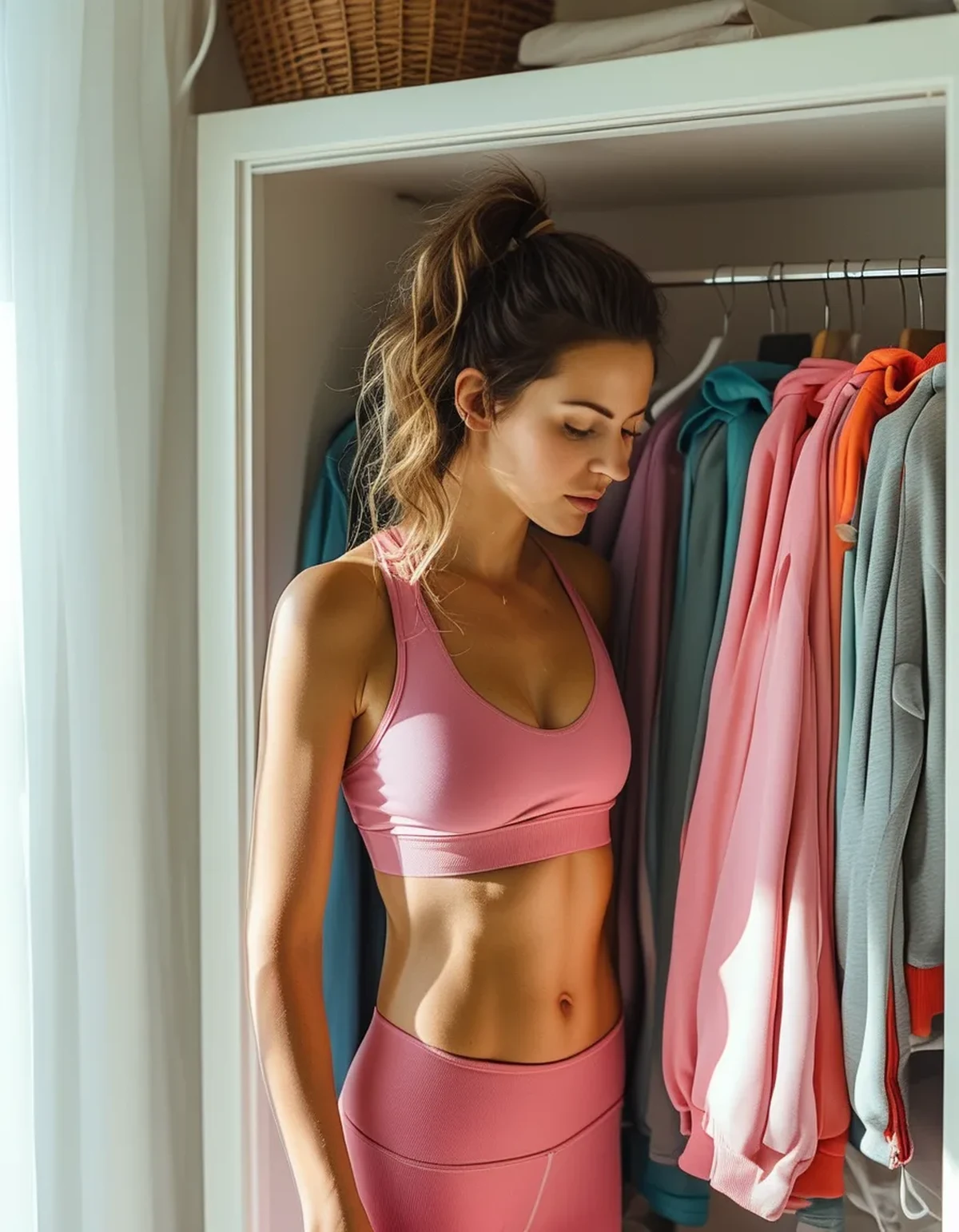
Here’s the part people don’t examine: most closets have far more sets than actual weekly workout slots to wear them in. If you work out 4 times a week, you functionally only need 4-5 sets in rotation (accounting for laundry day), and anything beyond that is sitting in reserve, not in active use — regardless of how good each individual set is.
Many people have 8-10 sets and still feel like they ‘need’ more, purely because 6 of those 8 rarely get chosen over the 2 favorites.
Does this mean you should never buy more than 4-5 sets?
Not necessarily — some people genuinely rotate more for variety, travel, or different workout types (yoga set versus running set versus lifting set), and that’s a legitimate functional reason. The point isn’t a hard cap; it’s checking whether the reason for the next purchase is functional or just novelty, since only one of those actually solves a real problem.
Myth vs Fact: Activewear Set Buying Edition
Myth: More matching sets means more outfit variety. Fact: Beyond your actual weekly workout count plus a laundry buffer, extra sets mostly sit unworn rather than adding real rotation.
Myth: A new color always justifies a new purchase. Fact: A new color in a fabric and fit you already own and love is often better solved by checking if your favorite set comes in that color, rather than starting over with an unfamiliar brand or cut.
Myth: If you can afford it, quantity doesn’t matter. Fact: Beyond affordability, a closet with too many barely-worn sets just means less clarity about what actually works for you, which makes future buying decisions harder, not easier.
FAQ: Activewear Set Questions, Answered
How many sets is actually reasonable for someone working out 3-4 times a week?
Roughly 4-6 sets covers a full week with laundry flexibility, without excess sitting unworn.
Should I get rid of sets I don’t wear before buying new ones?
It’s worth identifying why they’re unworn first — if it’s fit or fabric, that’s useful information for your next purchase; if it’s just having too many options, decluttering first often clarifies what you actually reach for.
Is it ever worth buying a set purely because you love the color?
Sure, occasionally — the two-set check isn’t meant to eliminate joy purchases entirely, just to make the decision an informed one instead of an automatic one.
TL;DR:
- Before buying another set, check if your current top 2 favorites are actually in weekly rotation
- A real gap is functional (climate, activity, wear-and-tear); novelty appeal usually isn’t
- Most closets already have more sets than actual weekly workout slots to wear them
- The rule isn’t a hard cap — it’s making the next purchase an informed choice, not automatic
Before your next matching-set purchase, check your last month of actual wear on your two favorites — that answer is more useful than the new color ever will be.
Keep Reading
This article is for general informational and styling purposes only. Fit, sizing, and product availability may vary.