The Two-Set Rule Nobody Follows Before Buying Another Matching Set
Quick Answer: Before buying another matching set, check if your current 2 most-worn sets are both in your laundry rotation right now. If yes, you likely have a genuine gap. If no, you’re buying for the photo, not the wardrobe.
A new matching set drops in a color you love, and the urge to buy hits immediately. Before checking out, there’s a genuinely useful two-question test that separates a real wardrobe gap from an impulse buy dressed up as ‘need.’

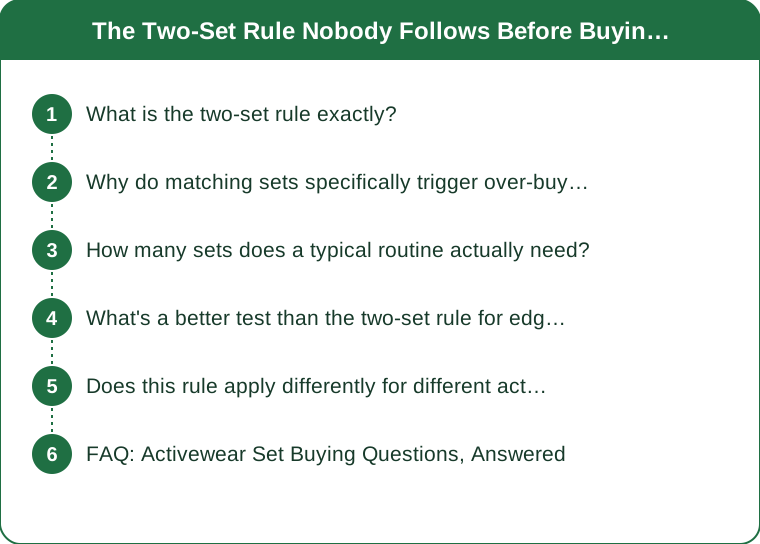
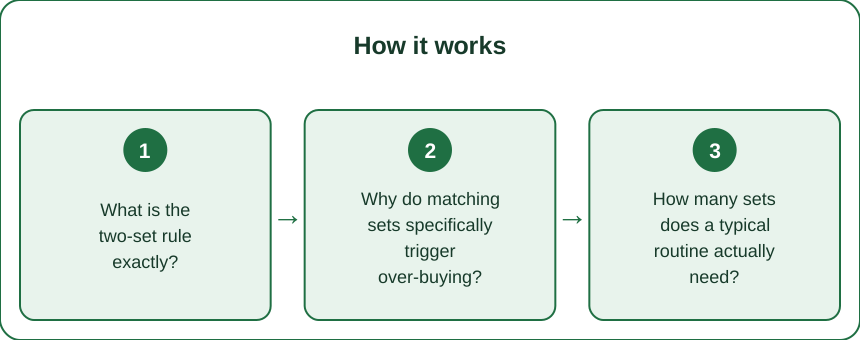
What is the two-set rule exactly?
Look at your 2 most-worn existing sets right now. Are both currently dirty, in the wash, or otherwise unavailable for tomorrow’s workout? If yes, that’s a real gap a new set would solve. If both are clean and available, the new set is solving a want, not a need — which is fine to buy, just worth being honest about.
Why do matching sets specifically trigger over-buying?
Sets photograph well and feel like a complete outfit decision made for you, which makes them more visually tempting than separates even when your actual wardrobe gap is a plain sports bra or a specific legging length, not another full coordinated look.
How many sets does a typical routine actually need?
For a 4-5 workout week with 2 laundry days, 3-4 sets total covers most rotations without gaps. Beyond that, additional sets are largely about variety and color preference rather than functional coverage — which again, is a fine reason to buy, just a different reason than ‘need.‘
What’s a better test than the two-set rule for edge cases?
If you can picture the exact workout and week you’d wear the new set for, and it’s not already covered by something you own, it’s likely genuine. If the honest answer is ‘I’d just add it to rotation with the others,’ it’s a want-based purchase.
Does this rule apply differently for different activities?
Somewhat — a specific technical need (a swim-specific set for a new activity, a winter-weight set you don’t currently own) bypasses the rule entirely, since that’s a genuine capability gap, not overlap with existing options.
FAQ: Activewear Set Buying Questions, Answered
Is it wasteful to buy a set I just want, not need?
Not inherently — the rule is about self-awareness, not restriction. Knowing it’s a want lets you decide deliberately rather than justifying it as a need you don’t actually have.
Should I apply this rule to separates too?
The same logic works for any activewear purchase — check current rotation availability before assuming a gap exists.
What if I work out 6+ times a week?
Higher frequency reasonably justifies more sets in rotation — recalibrate the ‘3-4 sets’ baseline upward proportional to your actual weekly session count.
TL;DR:
- Check if your 2 most-worn sets are both unavailable right now before buying another
- Sets tempt over-buying more than separates because they photograph as a complete decision
- 3-4 sets typically covers a 4-5 day week with normal laundry cycles
- A genuine new activity or fabric need bypasses the rule entirely — that’s a real gap
The rule isn’t about saying no — it’s about knowing which reason you’re actually buying for.
Keep Reading
This article is for general informational and styling purposes only. Fit, sizing, and product availability may vary.