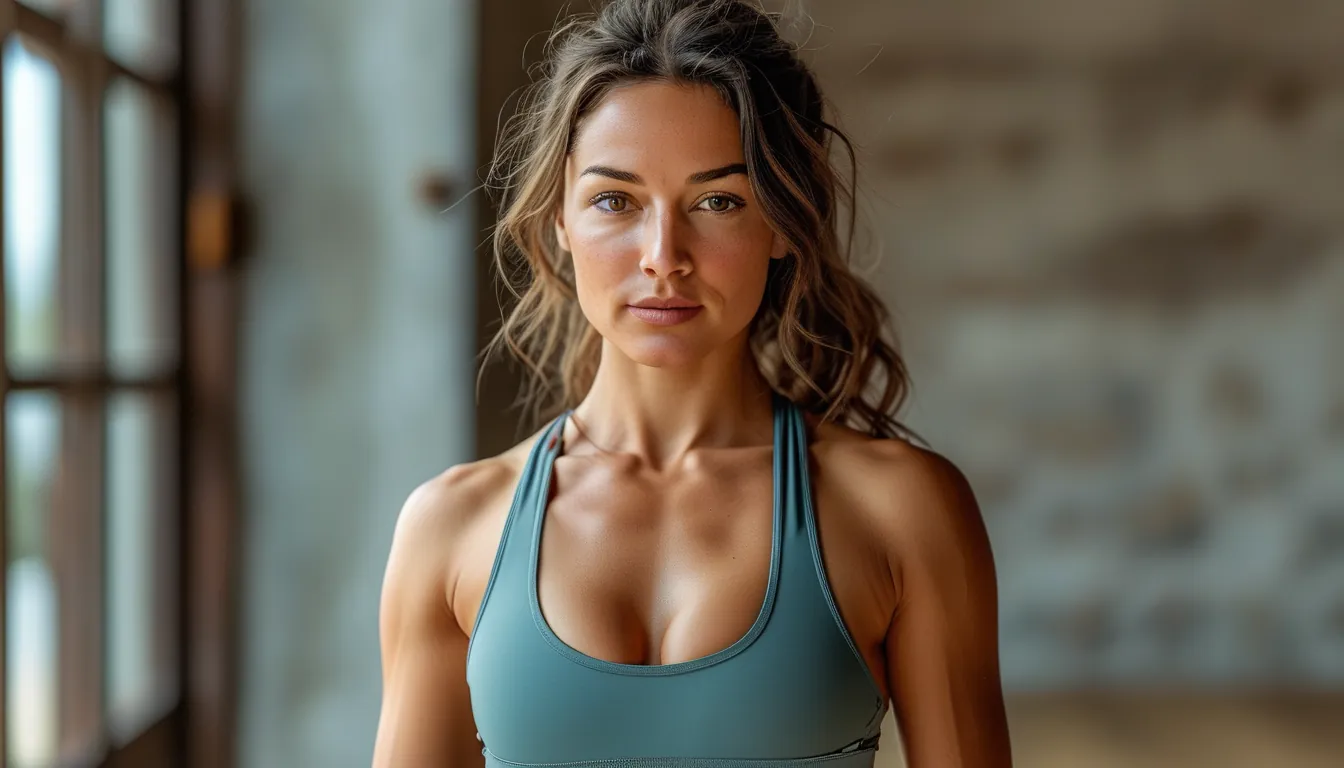
Why a Set That Photographs Well Often Wears Badly (and Vice Versa)
Quick Answer: Photography favors fabrics that hold structure, saturate color, and create clean lines — usually stiffer, denser, higher-sheen material. Wearing favors fabrics that move, breathe, and recover. Those are largely opposing properties, which is why the set that looked extraordinary online can feel restrictive in use, and the one you actually reach for looks unremarkable in photos.
You have two sets. One looks incredible in every picture and lives in the drawer. The other is what you actually wear and looks flat in photos. Neither is a mistake — they’re optimized for different things.
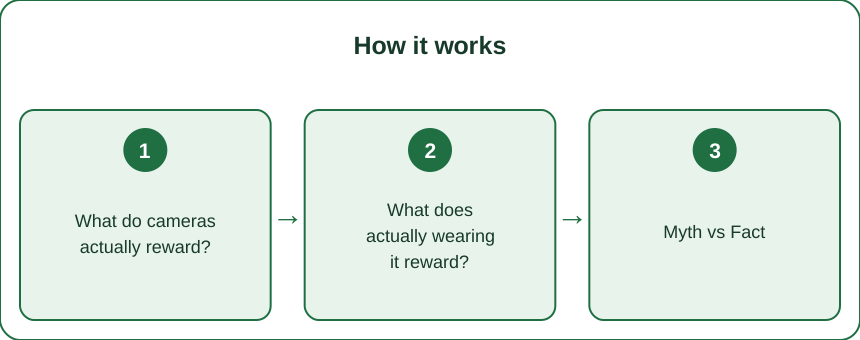
What do cameras actually reward?
Four properties, none of which correlate with comfort.
Structure. Fabric that holds its shape reads as clean and deliberate. Fabric that drapes softly can look shapeless in a still image, particularly in flat commercial lighting.
Sheen. A slight surface sheen catches light and creates definition. Fully matte fabrics photograph flatter and can look cheaper than they are.
Color saturation. Denser fabrics hold pigment more intensely. The same dye on a lighter-weight knit reads noticeably paler.
Seam definition. Visible, well-placed seams create lines that suggest shape. Seamless construction, which is often more comfortable, photographs as an undifferentiated surface.
What that means in practice
A set optimized for e-commerce photography tends to be denser, stiffer, shinier, and more seamed than one optimized for a workout. That’s not a deception — both are legitimate design targets. But it explains a great deal about the gap between the product page and the first wear.
What does actually wearing it reward?
Roughly the opposite list.
Give in the right directions. Four-way stretch that yields where the body demands it. This usually means a less dense knit, which photographs less crisply.
Recovery. Returning to shape after being stretched. High-recovery fabrics often have a softer hand and less sheen.
Breathability. Open knit structures move air, and open knits photograph as less substantial.
Seam placement away from friction zones. Which frequently means fewer or differently placed seams than the ones that create the best visual lines.
Weight distribution. A garment that stays put through movement. Heavier fabric often achieves this and costs breathability, so there’s a genuine trade-off rather than a right answer.
The one property that serves both
Opacity under stretch. It looks bad in photos and feels bad in use. It’s the single specification worth being uncompromising about, and it’s the one most reliably misrepresented by product photography — which is shot on a still, unstretched body.
Myth vs Fact: Sets, Photos, and Reality
Myth: A set that looks expensive photographs expensive because the fabric is better. Fact: It photographs expensive because it’s denser and shinier. Density and sheen correlate with cost but not reliably with performance.
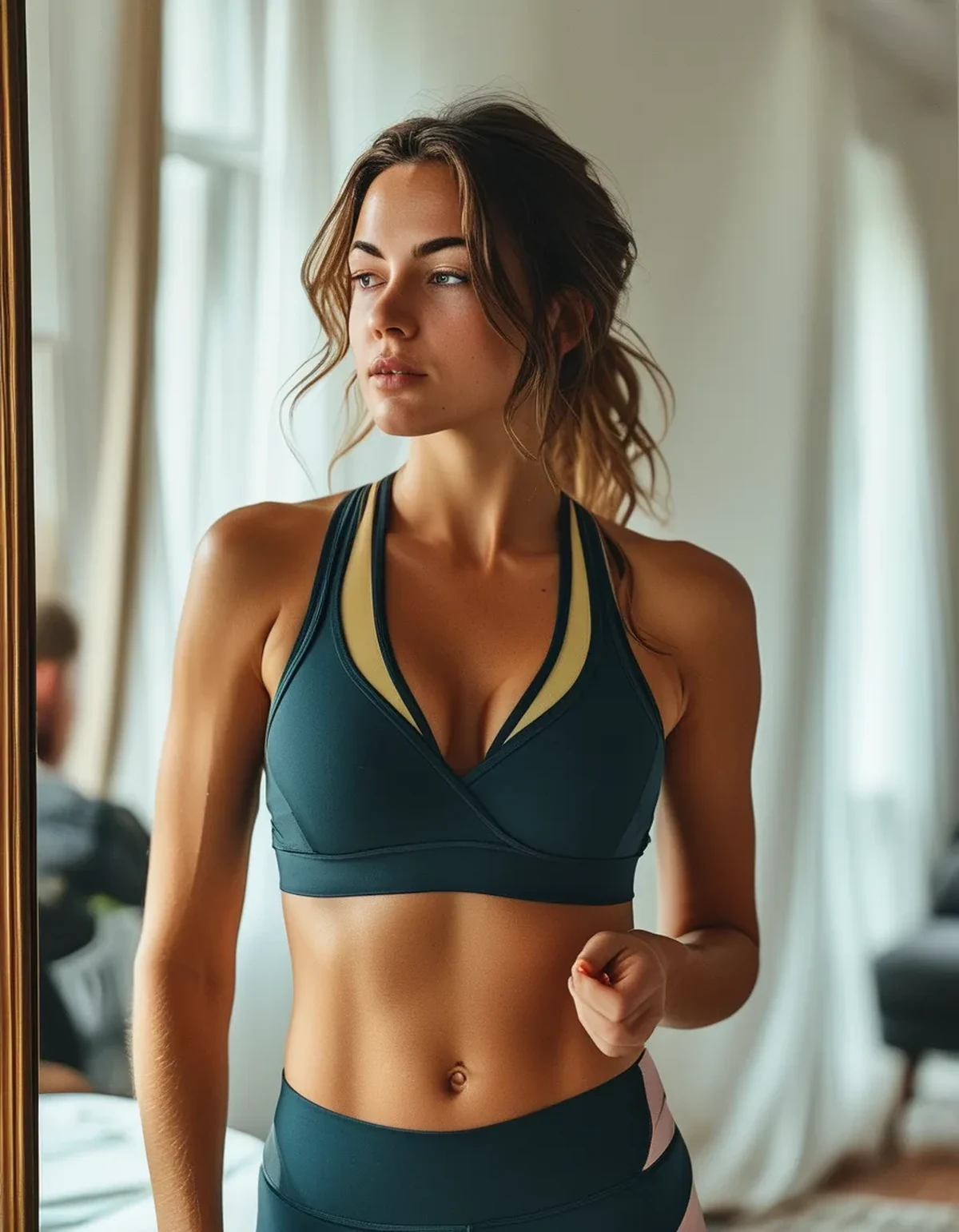
Myth: If it looks good on the model it’ll look good on you. Fact: Product images are shot in controlled lighting on a still body, often with clips at the back. The image tells you about the fabric’s photographic properties, not its behavior in motion.
Myth: Matte fabric is lower quality. Fact: Many high-performance fabrics are deliberately matte. Sheen is a finish choice, not a quality indicator.
Myth: More seams means better construction. Fact: More seams means more shaping and more visual definition. It also means more potential friction points. Neither is strictly better.
Myth: You should own one set that does both. Fact: The properties genuinely conflict. Owning one of each is a more honest solution than searching for a garment that resolves the trade-off — because for the most part, it doesn’t get resolved.
How should you actually choose?
Decide what the set is for before you shop, and let that pick the properties.
If it’s for training: prioritize four-way stretch, opacity under full stretch, and seam placement. Accept that it’ll photograph less dramatically. Test by squatting, lunging, and reaching overhead — not by looking at yourself standing still.
If it’s for wearing out — errands, travel, coffee: structure and color saturation earn their place. You’re standing and walking, not squatting, so the stiffer fabric costs less than it would in a gym.
If it’s for photos specifically — content, an event, a trip you’ll photograph: structure, sheen, and seam definition are the right priorities, and you’re choosing correctly by picking the one that photographs well.
The two-set approach
This is the practical resolution: one performance set and one presentation set covers nearly everything, and it costs less frustration than repeatedly buying single sets that half-work. Most people discover this after four or five purchases; deciding it deliberately saves the intervening ones.
Late-summer note: transitional weather actually favors the presentation set, since you’re layering over it and structure holds up better under a jacket than soft drape does.
FAQ: Set Selection Questions, Answered
How can I judge fabric from an online listing?
Look for weight in gsm if listed — above roughly 250 gsm suggests structure, below suggests drape. Check whether the model photos show any movement, and read reviews specifically for squat and opacity mentions.
Why does my set look different in my mirror than in the store’s?
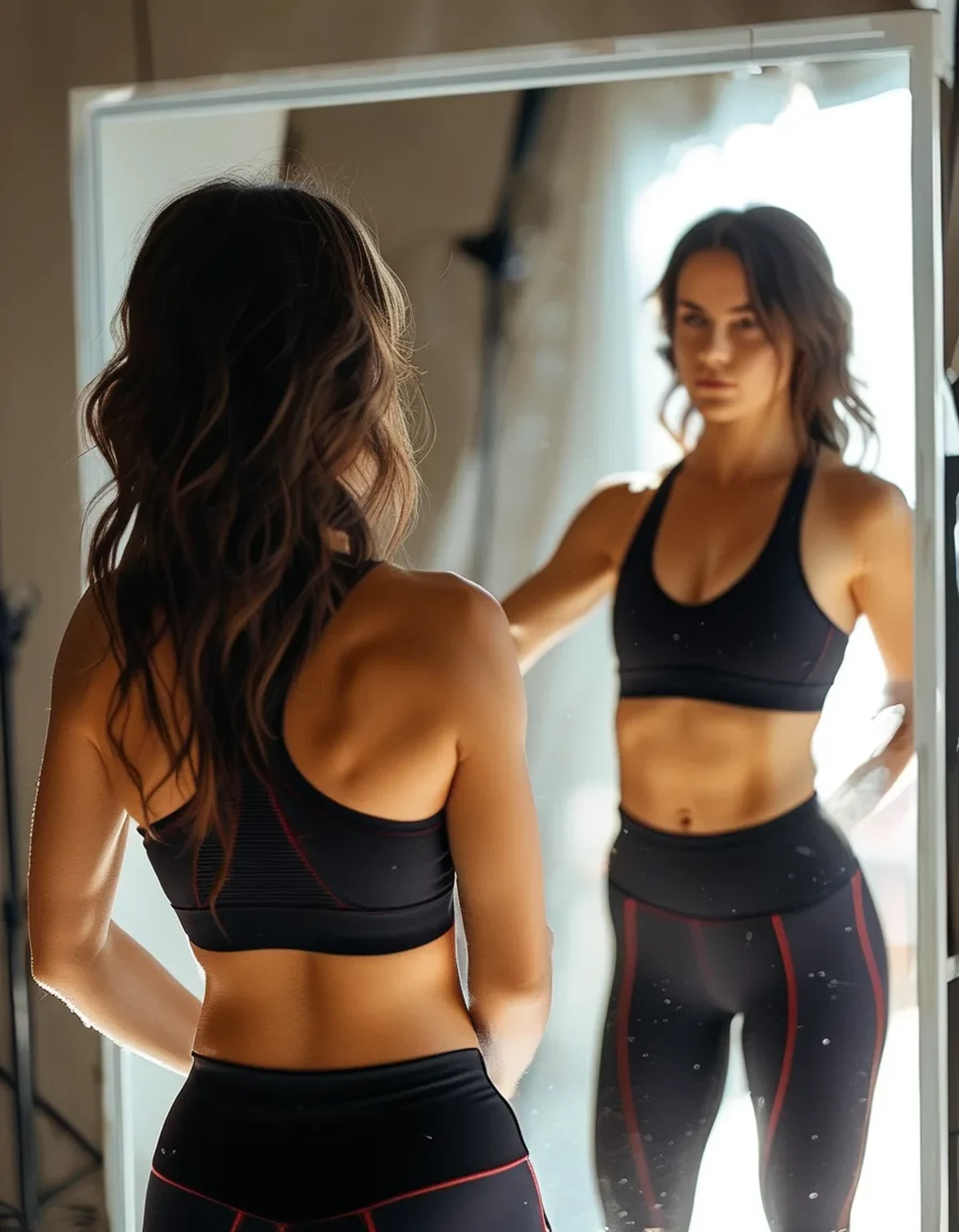
Lighting. Store lighting is usually designed to flatter fabric — brighter, more directional, often warmer. Home mirrors are a much harsher and more honest test.
Does the top or the bottom matter more for fit?
Bottoms, almost always. A top can be slightly off and still work; leggings that are slightly wrong are wrong the whole time you’re wearing them.
Are more expensive sets actually better in motion?
Sometimes, but price tracks fabric density and finish more closely than it tracks performance. Some mid-priced performance fabrics outperform premium ones designed for looks.
Should the top and bottom be the same fabric?
Not necessarily, and matched sets that use slightly different weights top and bottom are often better designed — the torso and legs have genuinely different requirements.
TL;DR:
- Cameras reward structure, sheen, saturation, and seam definition
- Wearing rewards stretch, recovery, breathability, and seam placement — largely opposing properties
- Opacity under stretch is the one specification that matters for both, and photos never test it
- Decide the purpose first: performance set, presentation set, or photo set
- Two purpose-built sets beat repeatedly buying one that half-works at both
The set that disappointed you probably wasn’t badly made. It was made for the picture you saw it in, and that’s a different job from the one you bought it for.
Keep Reading
This article is for general informational and styling purposes only. Fit, sizing, and product availability may vary.