Why the Second Matching Set You Buy Should Not Be Black
Quick Answer: Your first set is almost always black or another neutral, and a second black set adds almost nothing — you cannot tell them apart in your drawer, they wear out on the same schedule, and neither piece expands what you can mix. A mid-tone color or heather gives you two new mix-and-match combinations instead of zero, hides pilling better, and covers a different set of occasions.
Everyone buys black first, and that is the correct decision. It works everywhere, it flatters everything, and it is the safest possible entry point.
Then almost everyone buys black again, usually reasoning that the first one worked. It is the most common wardrobe mistake in activewear, and the cost is not obvious until you have four sets and still feel like you have nothing to wear.

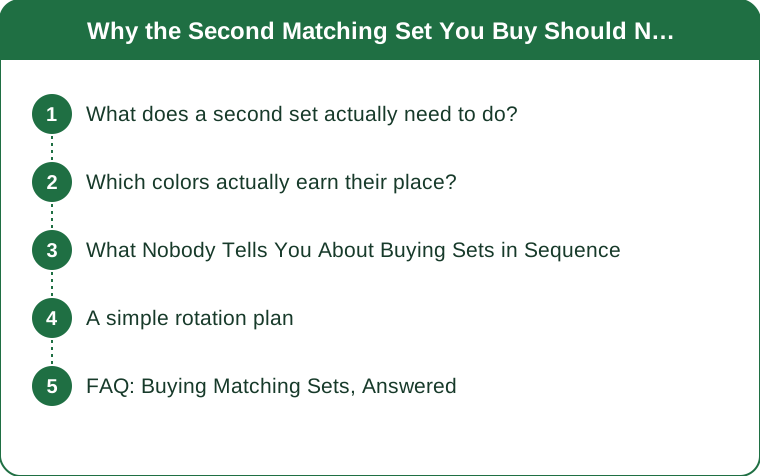
What does a second set actually need to do?
It needs to add options, and options come from combinations rather than from garments.
With one black set you have one look. Add a second black set and you have — one look, twice. Add a mid-tone set and you have four: the black set, the color set, the black top with color bottoms, and the color top with black bottoms. Two of those combinations did not exist before, and both of them work precisely because your first purchase was a neutral.
There is a laundry argument too. Two identical black sets get worn interchangeably, which means both age at the same rate and both fade toward the same slightly-off black — and then neither matches the other. Two different colors age independently and stay usable.
And there is the drawer problem, which sounds trivial and is not. Two black sets of similar fabric are functionally indistinguishable when folded, so people end up reaching for the same one repeatedly and wearing it out first anyway.
The purpose of a second set is not backup. It is expansion.
Which colors actually earn their place?
Not the ones that photograph best in a product shot.
Mid-tone neutrals with a color cast are the strongest second purchase: sage, taupe, clay, dusty rose, slate blue, olive. They pair with black cleanly, they read as intentional rather than gym-only, and they are dark enough to be forgiving.
Heathered fabrics deserve special mention. A heather gray or heather charcoal hides pilling, fading, and sweat marks better than any solid color, which makes it the most durable-looking option on this list. If you want a second set that still looks new in a year, heather is the answer.
Deep jewel tones — burgundy, forest, navy, plum — work well as a second or third and are particularly good in cooler months. They pair with black about as well as neutrals do.
What to avoid as a second purchase: true white and very light pastels, which are unforgiving about sweat and sheerness; neon and high-saturation brights, which are hard to pair and fade fastest; and any print, which mixes with nothing.
And avoid matching your second set’s fabric to a different weight than your first. A ribbed set and a smooth seamless set in coordinating colors still look mismatched when you cross them, which defeats the purpose of buying for combinations.

What Nobody Tells You About Buying Sets in Sequence
A few things that only become obvious after the third or fourth purchase.
Buy the bottom in the safest color and take the risk on the top. Leggings are what you will wear with everything, and a bold bottom limits pairing far more than a bold top does. If you want a color you are unsure about, get it in the top.
Your third purchase should probably not be a set at all. By the time you own two sets, the highest-value addition is usually a second pair of leggings in your best-performing color, because bottoms wear out roughly twice as fast as tops. A third full set gives you another top you do not need.
Check that the two sets are the same brand line if you plan to cross them. Different lines from the same brand often differ in fabric weight, sheen, and waistband height, and a top from one line over leggings from another reads as accidental rather than coordinated.
Consider the occasions, not just the colors. Most people have one set for training and then buy a second identical training set, when the actual gap in their rotation is something they could wear to run errands or travel in. A slightly more structured or matte fabric in a muted color covers that gap.
Photograph your existing set before shopping. Screen colors are unreliable, and holding a photo of what you own next to a product page prevents the most common outcome — a second set that is almost but not quite the same shade as the first, which is worse than either matching or contrasting.
A simple rotation plan
If you want a small, genuinely useful set collection rather than a drawer full of near-duplicates:
Set 1: black or charcoal. Everything works with it. Buy the best quality you can.
Set 2: a mid-tone neutral with a color cast, or a heather. This is the purchase this article is about. You now have four combinations.
Purchase 3: a second pair of leggings in whichever color you wear most. Not a set. This is the highest-value item in the whole sequence and the one people skip.
Set 4: a seasonal or occasion set — a deeper tone for cold months, or a lighter one for summer, depending on your climate. By now you know what you actually reach for.
Stop and reassess after four. Most people who own five or more sets are wearing three of them, and the two dead ones are usually the print and the second black.
The whole point is that a set is only as valuable as the number of outfits it participates in. Buy for combinations, not for garments, and a four-piece collection outperforms an eight-piece one built on repeats.
FAQ: Buying Matching Sets, Answered
Is it ever right to buy the same set twice?
Yes, in one case: when a set is genuinely your uniform, you wear it several times a week, and laundry frequency is the limiting factor. Even then, buying a duplicate bottom rather than a duplicate set is usually the better version of that decision.
What if the color I want only comes as a set?
Then buy the set and accept the extra top. Just be aware that the top is the piece you are less likely to need, and factor that into whether the price is worth it.
Do darker colors really last longer?
Not longer — they show wear differently. Deep saturated colors fade visibly and show pilling clearly; heathered and mid-tones disguise both. Very light colors show sweat and sheerness. Heather is the most forgiving category overall.
TL;DR:
- A second black set adds one repeated look; a mid-tone or heather set adds four combinations.
- Two identical black sets fade at the same rate toward slightly different blacks and stop matching each other.
- Best second choices: sage, taupe, clay, slate, dusty rose, or a heather gray — avoid white, neon, and prints.
- Take color risks on the top, keep the bottom versatile, and make your third purchase a duplicate pair of leggings instead of a third set.
Buy for the number of outfits a purchase creates, not for the garment itself. That one shift keeps a four-set drawer more useful than most people’s eight.
See It in Motion
Seen here: High Waist Embossed Yoga Leggings with Side Pockets — shop it on bubblelime.com
Keep Reading
This article is for general informational and styling purposes only. Fit, sizing, and product availability may vary.