Why the Top and Bottom of a Set Age at Different Rates
Quick Answer: The two halves of a set live completely different lives. Leggings get four to six times more abrasion, more stretch cycles, more body oil, and more direct sun than the top does, and they are usually cut in a heavier, higher-elastane knit that responds differently to heat. A set fails as a set long before either piece fails on its own - and once the colours drift, no amount of care brings them back together.
Here is where the divergence comes from, and how to slow it down.

Why does the legging always look older than the top?
Abrasion is not evenly distributed across your body. The inner thigh of a legging rubs against itself with every step; the equivalent contact on a top happens only under the arms. Over a few hundred wears, that difference is enormous.
Seat fabric takes compression that no top experiences. Every time you sit, that area is stretched and pressed against a surface. Chairs, car seats, and gym benches are all mildly abrasive, and rougher upholstery accelerates it noticeably.
Leggings stretch further, more often. A squat can put the knee and seat area near the top of the fabric’s stretch range, and each cycle costs the elastane a small amount of recovery. Tops rarely leave the middle of their range.
Body oils concentrate differently too. The waistband sits against skin all day under pressure; the equivalent zone on a top is the underarm and neckline only. Oils degrade elastane over time, and where oils sit, fabric ages fastest.
And sun exposure is asymmetric in ways people forget. Walking outdoors, your legs face the sun continuously while your top is often under a jacket. Over a summer of outdoor sessions, that is measurable fading on one half only.
Which fades faster - and why do they end up different colours?
Same dye lot, different conditions, different outcome. Even when both pieces were dyed together, the legging receives more UV, more washing friction, more sweat, and more heat - so the fade rate is not comparable.
Black is the most visible offender. Black activewear fades to a brownish or grey cast rather than a lighter black, and the eye picks up a black-and-charcoal mismatch instantly - far faster than it notices two slightly different navies.
Bright and saturated colours drift in hue, not just intensity. A vivid coral can shift orange, a rich teal towards grey. This is why a faded bright set often looks worse than a faded neutral one despite less total fading.
Ribbed and textured fabrics fade unevenly by design. The raised ribs get abraded while the valleys do not, producing a subtle striping that photographs badly even when the piece looks fine in the mirror.
And the top usually keeps its colour better while losing its shape. Bras and crop tops lose elastic recovery in the band while the body of the fabric still reads new. So the two pieces do not just age at different speeds - they age in different ways, which is why you cannot rescue the set by only replacing one.
The seasonal detail: as you move into autumn, sets get worn under jackets and over longer stretches indoors, so the top’s UV exposure drops further while the legging’s abrasion continues. The gap widens fastest in the transition months.
5 Care Mistakes That Split a Set Apart
1. Washing them together every single time. It sounds correct, but the legging needs washing after every wear and the top often does not. Washing the top unnecessarily just to keep the pair synchronised is added wear for no reason - and it does not actually keep the colours matched, because the fading driver is wear, not washing.
2. Any heat at all. The dryer is the single fastest way to destroy elastane recovery, and it hits the higher-elastane legging hardest. Air dry both, flat, away from a radiator or direct sun. A hot car boot counts as heat.
3. Fabric softener. It coats fibres, blocks moisture-wicking, and traps odour - which then produces more aggressive washing to compensate. It also makes technical fabrics feel slippery and sit differently against skin.
4. Washing leggings inside out - or rather, not doing it. Turning them inside out means the abrasion of the wash cycle happens on the inner surface, which protects the printed or dyed outer face. This costs nothing and genuinely slows visible fading.
5. Wearing the same set two days running. Elastane needs roughly 24 hours to recover its shape. Wearing it again immediately means starting the day already stretched, and the piece never returns to its original dimensions. This is the mistake that ages leggings fastest of all.
And one bonus: storing folded on a hot shelf. Sharp creases in high-elastane fabric held for months create permanent fold lines. Roll rather than fold, and store away from heat.
Should I buy two bottoms with one top?
For most people, yes - it matches how the pieces actually wear. Given the legging takes several times the abuse, buying it in a two-to-one ratio means both pieces retire at roughly the same point instead of leaving you with a perfect top and a shot legging.
Or buy the top in a colour that works with several bottoms. A neutral top has more matching partners as colours drift; a highly specific colour has exactly one, and it is fading on a different schedule.
Rotating three bottoms across two tops extends everything. Each piece gets more recovery time between wears, which is the single most effective longevity move available - more effective than any washing technique.
Consider buying the second bottom later, deliberately. After a month you know whether you actually like the fit, and you can buy the same style rather than gambling twice on day one. The risk is stock, which is real for seasonal colours.
And accept the honest outcome. Sets are a look, not a permanent state. Most matched sets read as matched for one season of regular wear, after which they become good separates. Buying with that expectation is more useful than fighting it.
How do I tell when a set has actually stopped matching?
Check in daylight, not indoor light. Warm indoor lighting hides hue drift almost completely. Take both pieces to a window - differences invisible at night are obvious at 11am.
Photograph them together. A phone camera is often stricter than your eye, particularly with blacks and navies, and photos are how most people will see the set anyway.
Do the shoulder test. Hold the top’s fabric directly against the legging’s waistband and look at the seam line between them. If you can see where one ends and the other starts, they no longer read as a set from across a room.
Check the areas nobody looks at. The inner thigh and seat of the legging tell you the real state of the fabric, not the front of the thigh you see in the mirror. Hold it up to the light - thinning shows before it becomes see-through.
And separate honestly once it happens. A drifted set is not ruined - it is two perfectly good separates, and treating it that way is better than leaving both pieces unworn in a drawer because they no longer look right together.
One last note on sizing across the pair. Many people take different sizes top and bottom, and that mismatch grows as each piece ages differently. If you are replacing only one half, re-check the size rather than assuming the original pairing still applies.
FAQ: Set Longevity Questions, Answered
Should I wash a matching set together to keep it matched?
No. Fading is driven mostly by wear, not washing, so washing the top unnecessarily just wears it out faster without keeping the colours aligned.
Does washing inside out really help?
Yes, meaningfully. The abrasion of the wash cycle lands on the inner surface rather than the visible dyed outer face. It is free and it works.
How long should a matching set look matched?
With regular wear, usually about one season for a heavily used set. Rotating multiple bottoms extends that considerably.
Why does my black set look like two different blacks?
Black fades toward brown or grey rather than to a paler black, and the legging fades faster. Two slightly different blacks are far more obvious than two slightly different navies.
Can I restore faded activewear with dye?
Generally not well. Elastane and most technical synthetics take home dye poorly and unevenly, and heat-based dyeing damages the stretch further.
Is it worth buying two bottoms with one top?
For anyone wearing a set weekly, yes. It matches the actual wear ratio and means both pieces reach the end of their life at the same time.
TL;DR:
- The legging takes several times the abrasion, stretch cycles, body oil, and sun the top does. Same dye lot, different life.
- Black is the most visible failure because it fades toward brown or grey, not toward a lighter black.
- Never use heat and never use fabric softener - both hit the higher-elastane bottom hardest.
- Wash leggings inside out, and give any piece 24 hours to recover before wearing again. That recovery gap matters more than washing technique.
- Buy two bottoms to one top if you wear the set weekly - it matches the real wear ratio.
- Judge the match in daylight or in a photo, not under warm indoor lighting.
A drifted set is not ruined. It is two good separates, and using it that way beats leaving both unworn.
See It in Motion
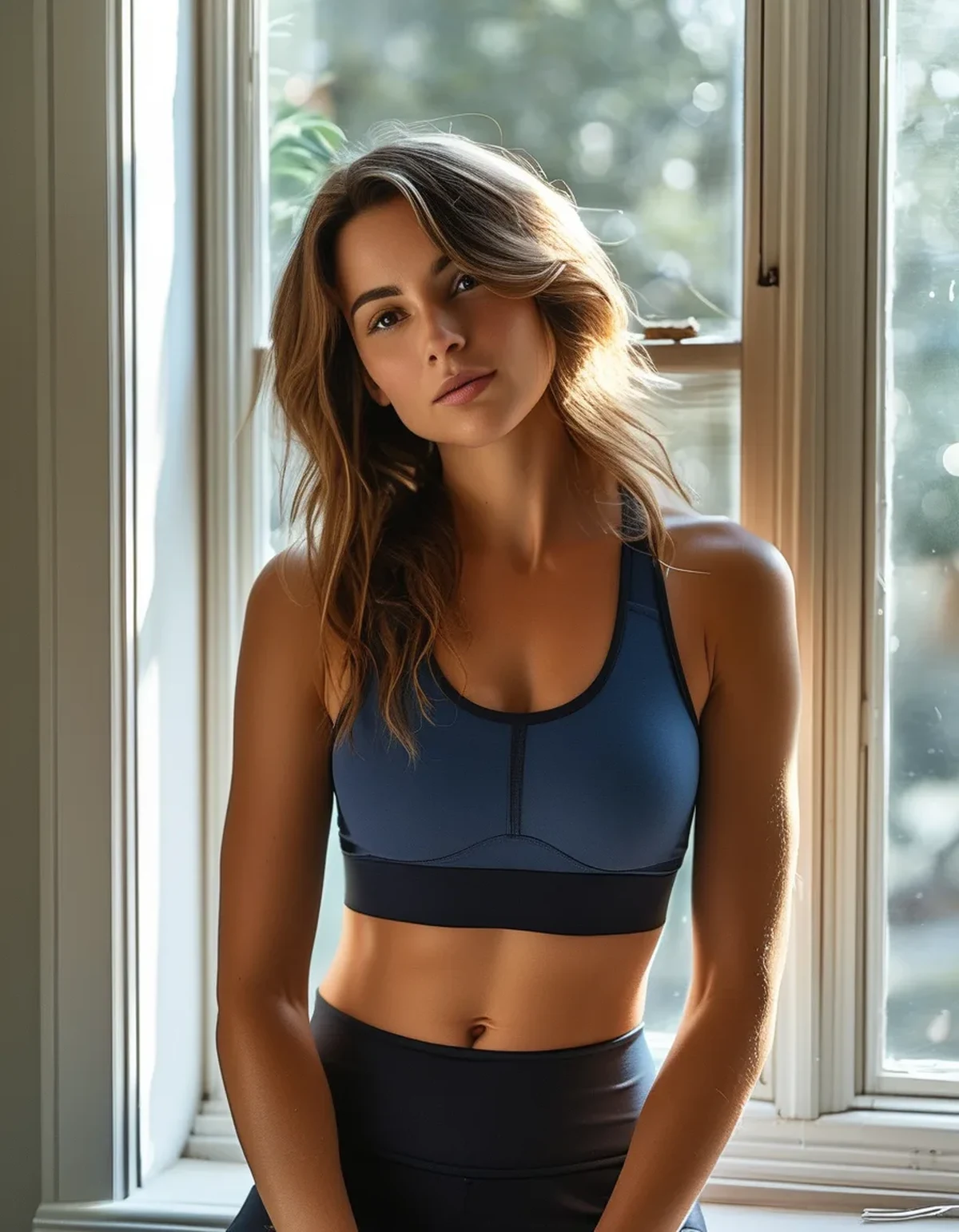
Seen here: Super High Waist Embossed Yoga Leggings with Inner Pocket — shop it on bubblelime.com
Keep Reading
This article is for general informational and styling purposes only. Fit, sizing, and product availability may vary.